

Cava — Spanish sparkling wine
Cava is Spain's answer to Champagne: a sparkling wine made using the same traditional method, mostly in Catalonia, at a fraction of the price.
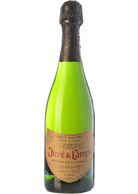
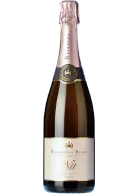
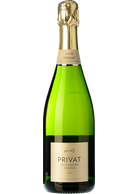
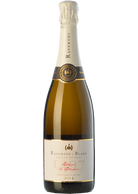
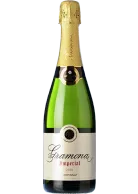


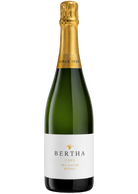


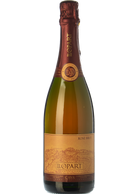
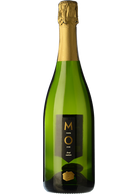
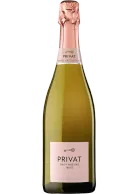
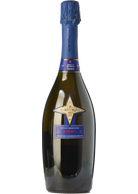
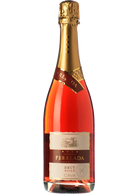
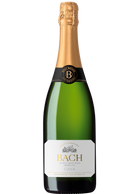
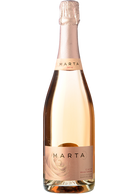
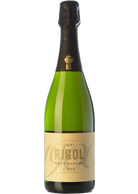
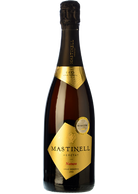
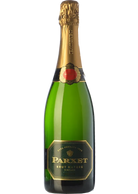

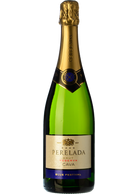


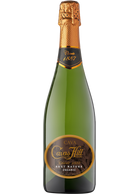
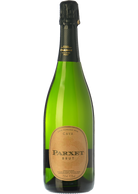

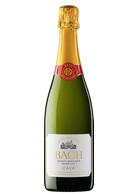
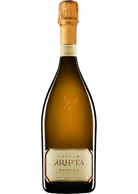
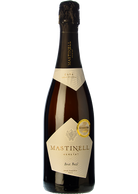
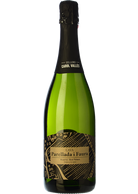
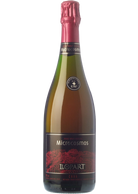
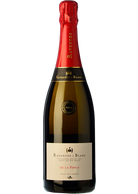
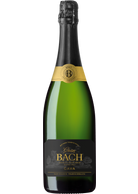
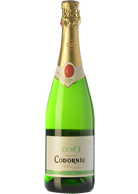

Cava is the name of a protected designation of origin, but it is also the common word we use to refer to sparkling wines made in Spain following the traditional method. In our shop, you will find cavas from Penedés, around Sant Sadurní d'Anoia, where you will find the main brands of cava and the vast majority of Pet Nat wine (ancestral sparkling wines), but also cavas made in Rioja, Rías Baixas, Rueda and other places, brut cavas and brut nature cavas, sweet cavas... A wide variety of prices and types, always of the best quality.
Why are they called Cavas?
Until 1972, sparkling wines were known in Spain by the popular term champagne, an obvious translation of the original French term: champagne. To protect its wines, French law forbade even translations from being used to refer to any other sparkling wine that was not covered by the originally protected indication, the AOC Champagne.
A cava is an underground cellar, and this term already appeared in official documentation from earlier times related to sparkling wine production. So this was the name used from then on to designate the sparkling wines traditionally produced in Spain and, by extension, also those produced in Spanish-speaking countries, such as Argentina and Chile. In 1972, the Regulatory Council of the DO Cava was constituted, and the first rules and guarantees of protection were created.
Are all Cavas covered by the DO Cava?
No. DO Cava is still the main sparkling wine appellation in Spain, but not all Spanish sparkling wines are covered by it.
There are Cavas under the DO Penedès (under the Clàssic Penedès label), the DOCa Rioja or the DO Rías Baixas, among others, just as there are many sparkling wines not under any protected geographical indication, including some of the most famous and admired.
Raventós i Blanc was one of the first reputable producers to decide to leave the DO Cava (2012) to bottle under its appellation, not yet officially recognised: Conca del Riu Anoia, located in the northeastern part of Penedés.
Later, in the same Catalan region, the eleven wineries that make up the collective brand Corpinnat, created in 2017 with the aim of distinguishing the great sparkling wines produced in the heart of Penedés, also applied to deregister from the DO Cava; among them, two of the best: Recaredo and Gramona.
DO Cava is a very broad appellation. Its production area is spread over a large part of the peninsula, and this lack of a link to a specific terroir has always been one of the main criticisms made against it.
When it was delimited in 1986, the main production around Sant Sadurní was recognised as DO Cava, but also in other more distant Catalan localities, and that produced in municipalities located in regions as far apart as Aragón, La Rioja, Navarra, the Basque Country, the Valencian Community and Extremadura. To pinpoint the origin of the wine more precisely, in 2021, DO Cava was divided into four major sub-zones: Comtats de Barcelona (further subdivided into five: Valls d'Anoia-Foix, Serra de Mar, Conca del Gaià, Serra de Prades, Pla de Ponent), Valle del Ebro (also subdivided into two: Alto Ebro and Valle del Cierzo), Viñedos de Almendralejo and Zona de Levante.
The DO Penedès created its own label and regulation for sparkling wines in 2014: Clàssic Penedès, where we find such outstanding producers as Loxarel. The DO Rías Baixas had already created its own label for quality sparkling wine: Vino Espumoso de Calidad (2009) and one of the youngest is the one created by the DOCa Rioja: Método Tradicional. More and more appellations all over the peninsula are deciding to authorise and regulate the production of sparkling wines in their areas. Use our region filter to find out which are the most productive and enjoy the particularities of each place!
What are the best value-for-money Cavas?
The entry-level ranges of the most famous producers are always a good choice, but also some small producers with very carefully cuvées.
In the €10 price range, you can choose between a Valldolina Reserva or a Mas Candí; between €12-15, a Raventós i Blanc Blanc de Blancs or a Colet Tradicional will always be a great choice. Between €15-18, a Gran Reserva from Agustí Torelló Mata or Refugi de Loxarel. And for around €20, Gramona Imperial, Recaredo Terrers or Titiana Brut Nature from Parxet.
What are the best Cavas made outside Catalonia?
The sparkling wines from Bodegas Bilbaínas and Bodegas Muga are very good options to get to know the wines made in terroirs far from the Mediterranean: one based on Garnacha, Viña Pomal Brut Reserva, and the other based on Viura and Malvasía, Conde de Haro Brut, both still under the DO Cava and not under the DOCa Rioja.
Extraordinary too, any of the Tantum Ergo from Bodegas Hispano-Suizas, aged in Mediterranean lands but much further south, in the interior of the Valencian Community and with French grapes: Pinot Noir and Chardonnay.
In the Basque Country, without being under any protected geographical indication, you will find an excellent sparkling wine with a saline character signed by Artadi: Izar-Leku, made with the Txakoli grapes, Hondarribi Zuri and Hondarribi Belza.
What are ancestral Cavas?
Ancestral sparkling wines are not strictly speaking Cavas as they are not made in a classic way, with double fermentation. Ancestral Cavas or Pet Nat Wines are made with a single fermentation. Moreover, they are characterised by being natural wines (sulphite-free), with no added sugars or yeasts. If we use the term Cava, it is because we commonly associate it with sparkling wines produced in Spain and especially in Catalonia.
You can find ancestral sparkling wines in the Penedés wine region and other parts of Catalonia, but also in other areas of Spain, especially from biodynamic producers and defenders of natural wines; also in Languedoc, under the AOC Limoux Méthode Ancestrale.
What is an Enoteca Cava?
Cava d'enoteca is a long-aged Cava that pays tribute to the best vintages. They are very limited production wines aged in the cellar for extreme periods: the best ones, for ten years or more.
They are sparkling wines that mature with their yeasts for many years, reaching a much more subtle complexity. Wines of great nobility, Cavas of excellence that are among the best sparkling wines in the world. You can try either of Gramona's two versions: the Enoteca Brut and the Enoteca Brut Nature.
Which Cavas are ideal as gifts?
For a moderate budget, the Blanc de Blancs or the De Nit by Raventós i Blanc are excellent gift options: elegant wines inside and out.
Looking for originality, with the Rosat Barrica by Carles Andreu or the Torelló 225, as well as pleasing, it is surprising: a rosé and a white aged in barrels and presented in two stylish bottles.
In the higher range, pure exquisiteness and excellence, there is the Reserva Particular from Recaredo, the Celler Batlle from Gramona or the Mas Via from Mestres.
FAQs
What is cava wine?
Cava is a Spanish sparkling wine made using the traditional method, the same process used for Champagne. Most cava comes from Catalonia, around Sant Sadurní d'Anoia, though it's also produced in Rioja, Rías Baixas and other regions.
Is cava the same as Champagne?
No. Both are made with the same traditional method, but Champagne comes from the Champagne region of France and uses different grapes, mainly Chardonnay, Pinot Noir and Pinot Meunier. Cava is typically made from Xarel·lo, Macabeo and Parellada, and is usually more affordable.
Is cava sweet or dry?
Most cava is dry. Brut Nature and Brut are the most common styles, with little to no added sugar. Sweeter styles exist too, labelled Demi-sec or Dulce, but they're a small share of what's produced.
What's the difference between Cava and Cava Brut Nature?
"Cava" is the general category. "Brut Nature" is a sugar level within that category, the driest style, with no sugar added after the second fermentation. Other levels include Extra Brut, Brut and Demi-sec, from driest to sweetest.
What is Corpinnat?
Corpinnat is a small group of producers, including Recaredo and Gramona, who left the DO Cava label to create their own stricter quality standard. Corpinnat wines are made from organic grapes, aged longer, and produced entirely within the Penedès region.
How should you serve cava?
Serve cava chilled, around 6-8°C, in a tall flute or tulip-shaped glass to preserve the bubbles. Open it gently, holding the cork rather than letting it pop, to avoid losing pressure too quickly.
What is the best cava for a gift?
For a reliable, well-presented gift, a Reserva or Gran Reserva from a known producer like Codorníu or Freixenet is a safe choice. For something more distinctive, a Corpinnat from Recaredo or Gramona makes a memorable, food-pairing-friendly gift.
Is cava vegan?
Not always. Some producers use animal-derived products like egg whites or gelatine during fining. Many cavas are vegan, though, and this is usually stated on the producer's website or the bottle label if you need to check a specific one.
Can cava age, or should you drink it young?
Most cava, especially Brut and Brut Nature, is made to be drunk young and fresh. Some long-aged styles, called Cava de Guarda Superior or Gran Reserva, are built to develop more complexity over several years in the cellar.
What food pairs well with cava?
Cava's acidity and bubbles work well with seafood, fried foods like croquetas, cured ham, and lighter tapas. Drier styles also pair nicely with sushi, while rosé cava suits richer dishes like paella.