Wine from Valpolicella
Buy Valpolicella Wine Online — Delivered to the UK
Valpolicella is the lightest and most approachable wine from the Veneto zone in northern Italy — the everyday red that sits at the base of one of the most interesting wine hierarchies in the world. Vinissimus stocks Valpolicella from Tommasi and Masi Agricola, two of the zone's most respected producers, with delivery across the UK from £17.

Valpolicella
Buy Valpolicella Wine Online — Delivered to the UK
Valpolicella is the lightest and most approachable wine from the Veneto zone in northern Italy — the everyday red that sits at the base of one of the most interesting wine hierarchies in the world. Vinissimus stocks Valpolicella from Tommasi and Masi Agricola, two of the zone's most respected producers, with delivery across the UK from £17.
What is Valpolicella wine?
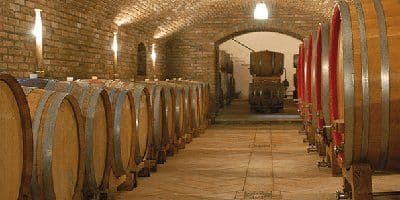
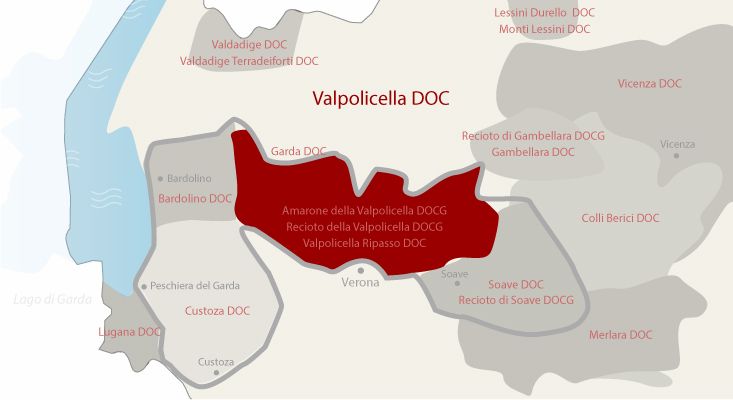
Valpolicella is a DOC red wine from the province of Verona in the Veneto region of northern Italy. It is made primarily from Corvina — which must account for 45–95% of the blend — alongside Corvinone, Rondinella and Molinara. The name Valpolicella means "valley of many cellars" in Latin, a reference to the network of wine caves that have shaped the zone since ancient times.
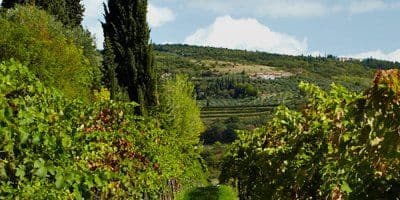
Winemaking in the area dates back to at least the time of the ancient Greeks. Today the zone covers around 7,800 hectares of vineyards across a series of valleys running north from Verona toward Lake Garda.
What does Valpolicella taste like?
Standard Valpolicella is light-bodied, fresh and fruit-driven — one of the more immediately approachable Italian reds. Expect:
- Red cherry, sour cherry and light plum on the nose
- A hint of almond on the finish — a characteristic of Corvina
- Medium-low tannins, bright acidity and a dry, clean finish
It is not a heavy or complex wine in its basic form. What makes it interesting is where it sits in the Valpolicella hierarchy — and what happens to the same grapes when they are dried or re-passed on Amarone skins.
The Valpolicella hierarchy — understanding the three levels
All three wines in the Valpolicella zone share the same grapes and the same vineyards. The difference is in the winemaking:
- Valpolicella Ripasso DOC: standard Valpolicella macerated a second time on the leftover skins from Amarone production. Fuller, richer and more structured — the step between Valpolicella and Amarone.
- Amarone della Valpolicella DOCG: grapes partially dried for 90–120 days before fermentation, producing one of Italy's most powerful and long-lived reds.
- Classico: grapes from the original historic zone — the three valleys of Fumane, Marano and Negrar. Generally considered the finest subzone, with better-exposed hillside vineyards and older vines.
- Superiore: minimum one year of ageing and slightly higher minimum alcohol (12% vs 11%). More structured and complex than standard Valpolicella, better suited to food and short-term cellaring.
- Pizza — one of the classic pairings, the acidity cutting through the cheese and tomato
- Pasta with tomato-based sauces
- Grilled chicken, turkey and mild pork dishes
- Charcuterie and salumi boards
- Mild hard cheeses
If you are new to the zone, Valpolicella is the entry point. Ripasso is the natural next step. Amarone is the top of the pyramid.
Valpolicella Classico and Superiore — what the labels mean
Two additional terms appear on Valpolicella labels worth knowing:
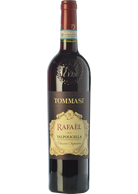
The Tommasi Valpolicella Classico Superiore Rafaèl on this page is a Superiore — more depth and structure than the standard bottling.
Valpolicella and food pairing
Valpolicella's light body, bright acidity and cherry fruit make it one of the most versatile food wines available at its price point:
Serve slightly below room temperature — 14–16°C — to keep the fruit fresh and the acidity lively.
FAQ
What is the difference between Valpolicella and Amarone?
Same grapes, same zone — completely different wines. Valpolicella is made from fresh grapes and is light, fresh and approachable. Amarone is made from partially dried grapes, producing a wine of exceptional concentration, power and longevity. Ripasso sits between the two — macerated on Amarone skins for added richness.
Is Valpolicella a dry wine?
Yes. Standard Valpolicella is dry. The only sweet wine from the zone is Recioto della Valpolicella, made from dried grapes with fermentation stopped early to retain sugar.
What does Valpolicella taste like?
Light and fruit-driven — red cherry, sour cherry and a hint of almond. Bright acidity, low tannins and a clean, dry finish. It is one of the more immediately approachable Italian reds at its price point.
What food pairs with Valpolicella?
Pizza, pasta with tomato sauce, grilled chicken, charcuterie and mild cheeses. The acidity makes it work well with tomato-based dishes in particular.
What is Valpolicella Classico?
Grapes from the original historic zone — the valleys of Fumane, Marano and Negrar — which is generally considered the finest subzone. Classico wines tend to have slightly more character and complexity than those from the extended zone.
- Via Valpolicella 57 37029 San Pietro in Cariano (VR)
- 045/7703194
- info@consorziovalpolicella.it
- http://www.consorziovalpolicella.it/